
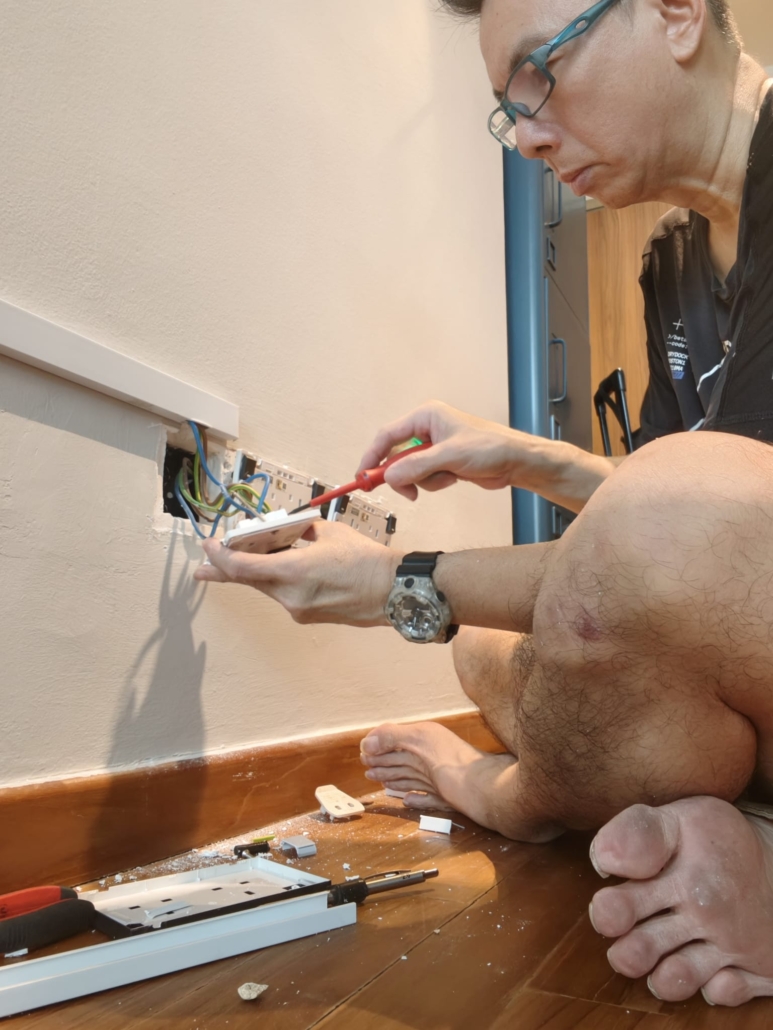
Modern Singapore homes use far more electrical devices than they did a decade ago. Televisions, routers, laptops, monitors, smart-home devices, kitchen appliances, air-conditioners and charging stations can quickly consume the available power points in a flat or house.
This is why many homeowners discover that they do not have enough power sockets shortly after moving in. Using extension cords and multi-plug adaptors as a permanent solution can create clutter and, if sockets are overloaded, increase electrical safety risks.
Planning your electrical wiring requirements before renovation is therefore more than a convenience. It allows an electrician in Singapore to design your electrical works around your actual lifestyle, appliance locations and future electrical needs.
There is no universal number of power points that is right for every home. The most useful approach is to plan according to how each room will be used and leave some capacity for future appliances.
Why Power Point Planning Matters
Power point planning should be part of your renovation plan from the beginning. Adding a power point later can involve additional wiring, surface trunking or hacking, which may increase the cost and disruption of electrical work.
Avoid Overloading Power Sockets
Relying on extension cords, double adaptors and multi-plug adaptors can become problematic when several high-power appliances share the same outlet. Singapore’s Energy Market Authority (EMA) specifically advises consumers not to overload power points or “piggy-back” multiple plugs into one socket, as overloading can cause overheating and potentially start a fire. (EMA)
The number of appliances connected is not the only consideration. Their individual electricity consumption also matters, so your electrician service should consider the expected load rather than simply counting sockets.
Reduce Renovation and Hacking Work
If you decide where your power sockets and switches should go before carpentry, tiling and painting begin, your electrician services team can complete the necessary electrical wiring at the appropriate stage.
Adding new power socket installations after renovation may require surface-mounted wiring or hacking into finished walls. Early planning can therefore save both time and unnecessary electrical work.
Plan Around Your Actual Electrical Needs
Think about where you charge your phone, where appliances will sit and where you are likely to work or study. Your electrical needs should determine the location and number of socket outlets rather than using a generic layout.
A good electrical plan should also account for future appliances, furniture changes and changes in how rooms are used.
Room-By-Room PowerPoint Guide
The right number of power points depends on the size of the room and the appliances you use. The figures below are practical planning guidelines rather than mandatory requirements.
| Room | Suggested Planning Range | Common Electrical Needs |
| Living Room | 6–10 | TV, soundbar, router, lamps, chargers, smart devices |
| Master Bedroom | 6–8 | Bedside charging, TV, dressing table, air-con |
| Secondary Bedroom | 4–6 | Charging, desk, fan, TV, study equipment |
| Kitchen | 8–12+ | Fridge, microwave, kettle, oven, toaster, rice cooker |
| Home Office | 6–10 | Computer, monitors, printer, router, chargers |
| Service Yard | 3–5 | Washing machine, dryer, water heater |
| Bathroom | Appliance-specific | Water heater and approved bathroom electrical points |
These are starting points, not fixed rules. A professional electrician can adjust the layout based on your floor plan, electrical load and appliance requirements.
Living Room
A modern living room can require considerably more power sockets than homeowners initially expect. The television alone may need several connections for a soundbar, streaming device, game console and other equipment.
Plan additional socket outlets near the sofa for phone chargers, floor lamps and laptops. A dedicated location for your router and smart-home equipment can also keep wiring organised.
Master Bedroom
The master bedroom typically needs power points on both sides of the bed for phone charging, lamps and other devices. If you have a dressing table, television or study corner, provide additional outlets nearby.
Air-conditioning equipment should be planned separately according to the electrical requirements of the installation. Your electrician can advise on the appropriate circuit and connection during renovation.
Secondary Bedrooms
A secondary bedroom should have enough outlets for everyday charging, lighting and study equipment. Even if the room is currently used as a guest room, planning for a future child, teenager or home office can prevent rewiring later.
A practical approach is to provide socket outlets near the bed, desk and television or entertainment area.
Kitchen
The kitchen usually has the highest concentration of electrical appliances. A refrigerator, microwave, oven, kettle, toaster, rice cooker, coffee machine and other home appliances can quickly consume available outlets.
Your electrical contractor should map each appliance before power point installation. High-load appliances may require dedicated circuits or connections, so simply adding more socket outlets is not always the correct solution.
Home Office or Study
Working from home has increased the demand for power points in study areas. A typical desk may need connections for a computer, two monitors, a printer, a desk lamp, speakers, a router and phone chargers.
Instead of relying on a single extension cord, consider several strategically positioned socket outlets around the desk. This keeps the workspace safer, cleaner and easier to manage.
Bathroom and Service Yard
Bathrooms require special consideration because electricity and water present additional safety risks. Water heaters and bathroom electrical installations should be assessed by a qualified professional rather than treated like ordinary room sockets.
In the service yard, allow for the washing machine, dryer and other appliances. The electrical layout should be planned around the actual equipment and manufacturer requirements.
HDB vs Condo: What Is Typically Provided?
The number and arrangement of electrical fittings provided can vary between developments, flat types and individual units. New HDB and BTO homes may already have basic electrical provisions, while condominium units can differ depending on the developer and project specifications.
HDB and BTO Flats
HDB renovation guidelines require homeowners to consider the electrical loading provision of the flat when planning electrical appliances. Certain higher-capacity installations, including some new 15A power points, may require HDB approval depending on the circumstances. (HDB)
This means you should not assume that every additional power point installation is simply a matter of adding another socket. Your electrician should review the existing electrical installation and proposed load before work begins.
Condominium Units
Condominium units can come with different combinations of socket outlets, lighting points and appliance connections depending on the developer and age of the property.
Older units may especially benefit from an electrical assessment before renovation. If your planned appliances significantly increase the load, your electrician in Singapore can advise whether additional circuits, wiring modifications or other electrical works are appropriate.
Why Existing Power Points Often Fall Short
Homes are now used for work, entertainment, exercise, education and smart-home applications. A layout that was adequate when a property was first completed may not suit a household with multiple computers, chargers, appliances and connected devices.
The goal is therefore not simply to add as many sockets as possible. It is to create a practical electrical system that supports your lifestyle safely.
How Many Power Points Are Enough?
No fixed number suits every home because electrical demand depends on appliance type, power consumption and room usage. A two-person home with minimal appliances can have very different requirements from a family with children and a full-time home office.
General Power Point Guidelines
| Area | Practical Starting Point |
| Living Room | 6–10 outlets |
| Master Bedroom | 6–8 outlets |
| Bedroom | 4–6 outlets |
| Kitchen | 8–12+ outlets |
| Home Office | 6–10 outlets |
| Service Yard | 3–5 outlets |
| Bathroom | Based on approved appliance requirements |
These figures should be treated as planning guidance rather than electrical standards. The appropriate number of socket outlets depends on the room layout and appliance load.
Future-Proof Your Home
It is often more efficient to install a few additional strategically positioned outlets during renovation than to discover later that your home does not have enough.
Consider future requirements such as an additional monitor, robot vacuum, smart speaker, air purifier, gaming system, standing desk or other home appliances.
Avoid Permanent Extension Cord Use
An extension cord can be useful temporarily, but it should not become a substitute for proper electrical wiring. If an appliance will remain in one location permanently, a correctly positioned socket outlet is generally a cleaner and safer long-term approach.
If you frequently find yourself using multiple adaptors in one area, that is a good indication that your home needs better power point installation.
When and How to Add Power Points
The best time to add power points is before renovation work reaches the finishing stage. Your electrician can coordinate wiring routes with your renovation contractor, carpentry, flooring and wall finishes.
Add Power Points During Renovation
During renovation, walls may already be open, and access to wiring routes is easier. This makes it more practical to install or relocate power sockets, switches and other electrical fittings.
Planning early also allows your electrician to coordinate the work with kitchen carpentry and built-in furniture.
Can Power Points Be Added After Renovation?
Yes, additional socket outlets can be installed after renovation, depending on the existing wiring and accessibility. However, the installation may require surface trunking, wall hacking or other electrical works.
The final method depends on the existing electrical layout, wall construction and location of the new power point.
How Long Does Installation Take?
A straightforward socket replacement or accessible socket installation may be relatively quick. New wiring routes, concealed installations and multiple power point installations can take longer depending on the property and renovation scope.
Your electrical contractor should assess the site before confirming the work duration.
Working With an Electrician for Wiring in Singapore
Electrical work should not be treated as a DIY renovation task. EMA advises consumers to engage a licensed electrical worker for electrical work, including the installation, repair or modification of electrical wiring and the addition, extension or replacement of power points, socket outlets and switches. (EMA)
Discuss Your Electrical Needs Before Renovation
Before work begins, provide your electrician with your renovation floor plan and appliance list. Discuss furniture placement, TV locations, workstations, kitchen appliances, charging areas and any future requirements.
This gives the electrician service team a clearer understanding of your electrical needs and helps reduce unnecessary changes later.
Review Your Electrical Load
Adding more outlets does not automatically mean that your home can safely support more high-power appliances. Your electrician should assess the existing circuits, protective devices and anticipated load.
For HDB flats, HDB specifically advises homeowners to understand the flat’s electrical loading provision when planning appliance installations. (HDB)
Understand Type G Socket Requirements
Singapore homes commonly use the Type G socket, which is the three-pin socket configuration used with Singapore’s electrical supply.
When replacing or installing socket outlets, make sure the selected fittings are suitable for the intended application and installed correctly by a qualified professional.
Common Electrical Issues to Watch For
Good power point planning can help reduce several everyday electrical problems, but existing wiring should also be assessed when symptoms appear.
Power Trips
Frequent power trips can indicate an overloaded circuit, faulty appliance or another electrical issue. Adding more sockets without investigating the cause may not solve the problem.
An electrician should identify the source of the trip before recommending additional electrical works.
Power Failure
A localised power failure affecting one section of your home can sometimes indicate an issue with a circuit, protective device or wiring. Avoid repeatedly resetting a breaker without identifying why it has tripped.
Professional testing can help determine whether the issue is related to the wiring, appliance or electrical distribution system.
Ageing Electrical Wiring
Old or worn electrical wiring may require inspection or replacement. HDB advises homeowners to replace flat wiring when its lifespan has been exceeded or when the wiring is worn out. (HDB)
If your home is undergoing a major renovation, it can be a suitable opportunity to assess older wiring before walls and finishes are completed.
Frequently Asked Questions About Power Points
How Many Power Points Do I Need in a Singapore Home?
There is no single mandatory number for every home. As a practical starting point, living rooms may need around 6–10 outlets, bedrooms 4–8, home offices 6–10 and kitchens 8–12 or more depending on the number of appliances.
The final arrangement should be based on your floor plan, appliance load and electrical needs.
Can I Add More Power Sockets After Renovation?
Yes, but the installation method depends on the existing wiring and wall construction. Concealed power socket installations may require hacking, while surface-mounted wiring may avoid major wall work but can affect aesthetics.
Planning power point installation before renovation is usually more convenient.
Is It Safe to Use Extension Cords Instead of Adding Power Points?
Extension cords can be useful for temporary needs, but they should not be used to overload a socket or permanently supply multiple high-power appliances. Overloaded power points can overheat and create a fire risk.
If you regularly need multiple plugs in one location, discuss a proper socket installation with a licensed electrician.
Should High-Power Appliances Have Separate Circuits?
Some high-power appliances may require dedicated circuits or specific electrical provisions. This depends on the appliance’s power rating and the home’s existing electrical installation.
Your electrician should assess the load and manufacturer requirements before deciding how the appliance should be connected.
Plan Your Electrical Needs Before Renovation
The question is not simply “How many power points do I need?” The better question is, where will you use electricity? Which appliances will be connected, and what might your household need in the future?
A carefully planned electrical layout reduces dependence on extension cords, improves convenience and can minimise expensive electrical work after renovation. It also allows your electrician to consider circuit loading, socket locations, switches and other electrical services as one coordinated system.
For HDB flats and other Singapore homes, electrical work should be carried out by an appropriately licensed professional.
Planning a renovation or needing more power points in your home? Talk to Electricman Singapore for an honest consultation and professional electrical wiring services. Discuss your electrical needs early, so your home is ready for the appliances, technology and lifesty

